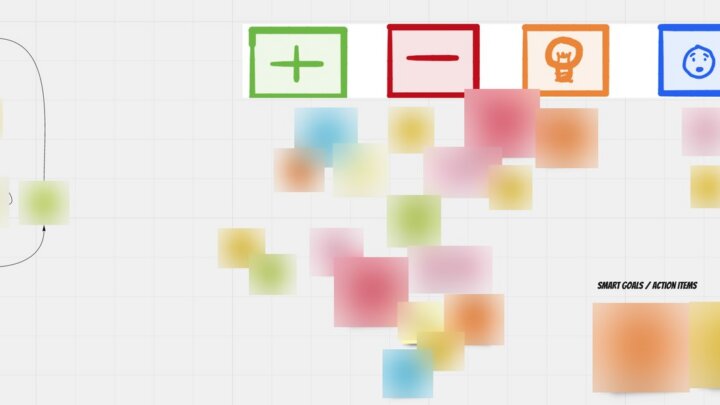
I keep experimenting with layouts for retrospectives. Here are two versions, on paper and on screen. Both leave room to look back and decide what to improve.
The paper version groups prompts around a central title: what went well, what did not, what was surprising, and what to improve. A timeline adds two useful questions: what happened when, and what should have happened?
Mastering Scrum does not lose any of its importance for me. Therefor I decided to go for a Scrum Master Certificate months ago. Due to the Corona pandemic my plans relativized, since the next trainings would be online and I wanted in person. But last week it happened: The training with a small group of other finally took place 😁
It was a 3 day training by Timon Fiddike and Anton Skornyakov from agile.coach. Those guys did a great job at coping with the range of experience the participants had. The most unexpected thing for me was—and I guess that was the key driver for that highly valuable training—they actually implemented Scrum elements during the training itself. Having dailies, a retrospective, and most importantly: they listened to what the group wished for. And: they checked if their “corrections” had the intended effect. (That is something so important and far too rarely done.)
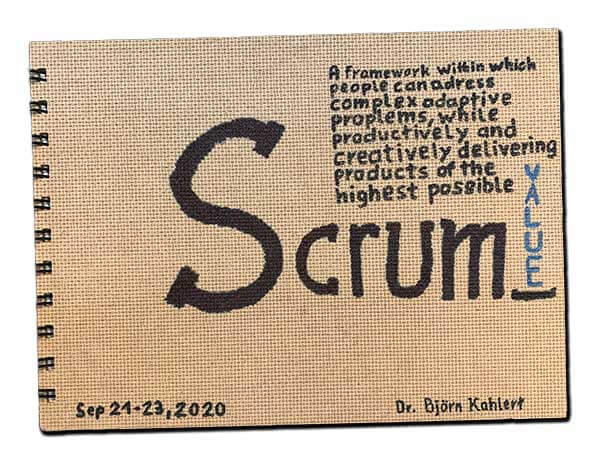
Oh and one last thing: I’m so happy I did it. 10min before leaving my apartment I saw some empty sketch books laying around. Unused. So—although I never did that before—I grabbed one and documented everything I considered relevant to myself in it (which is the excuse for being too late on the first day). As I got unexpectedly positive feedback on it, I decided to share it with you. I hope you enjoy!
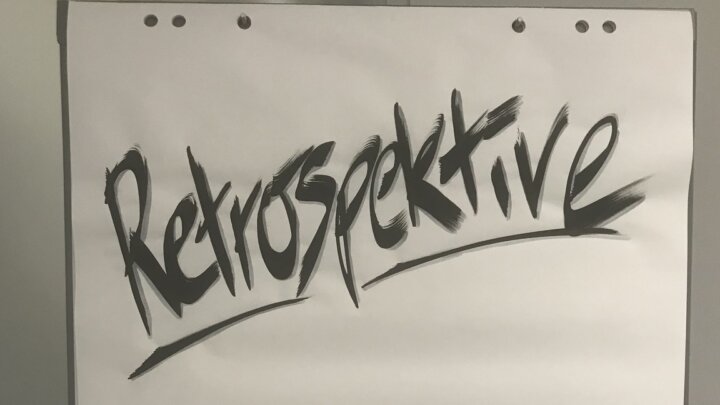
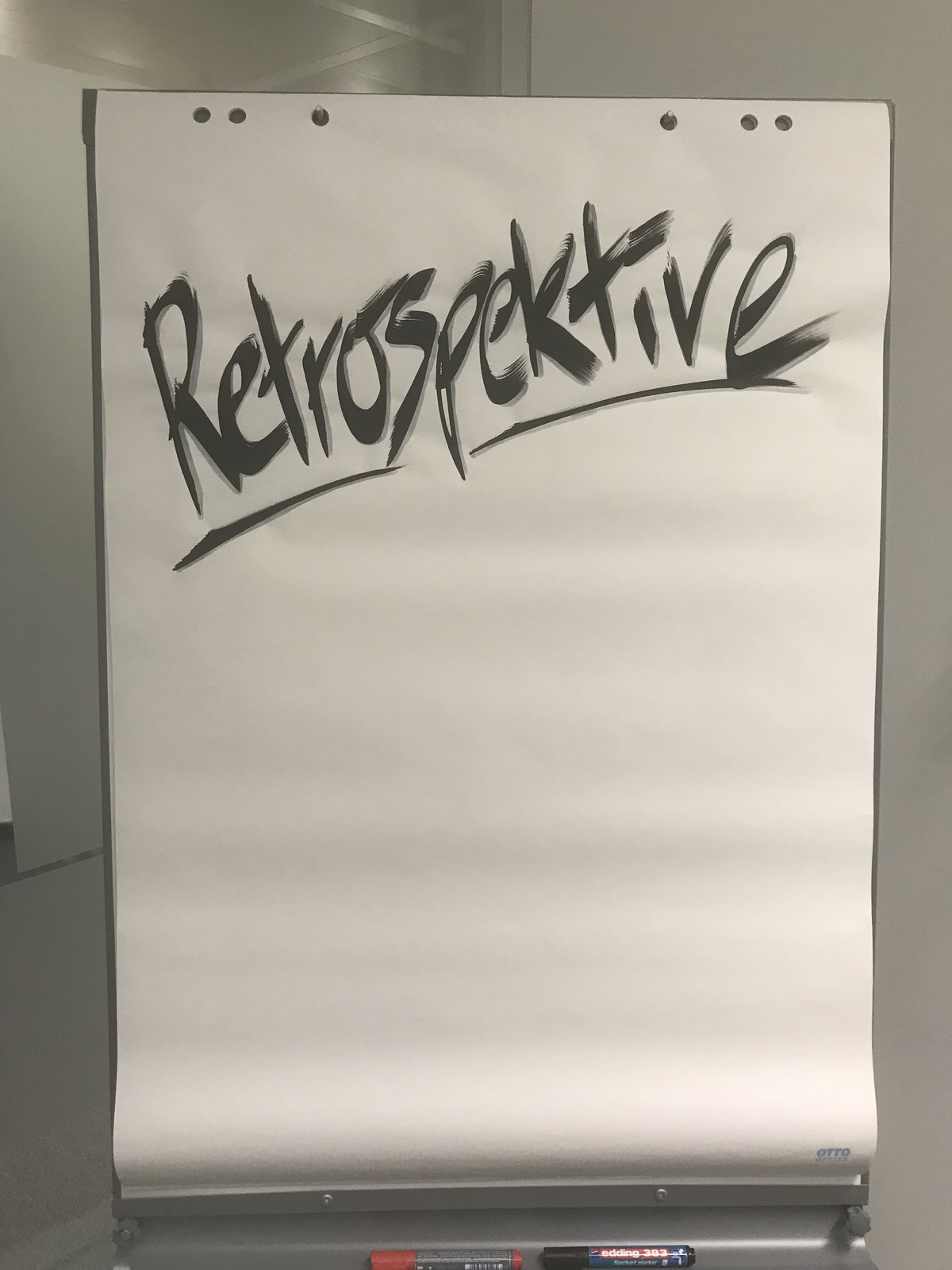
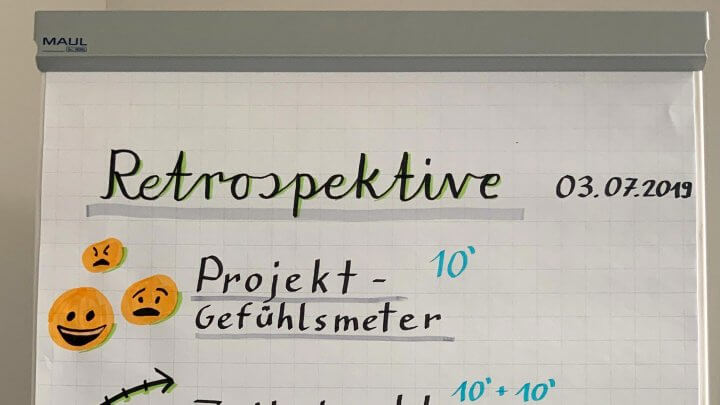
After my first retrospectives, here is another chance to put my lettering practice to work. I prepared three flipcharts: a title, four questions, and an agenda.
Retrospective title
The questions are Loved, Learned, Lacked, and Longed—the 4Ls. Each has its own field, leaving room for contributions. The title, meanwhile, got plenty of room of its own.
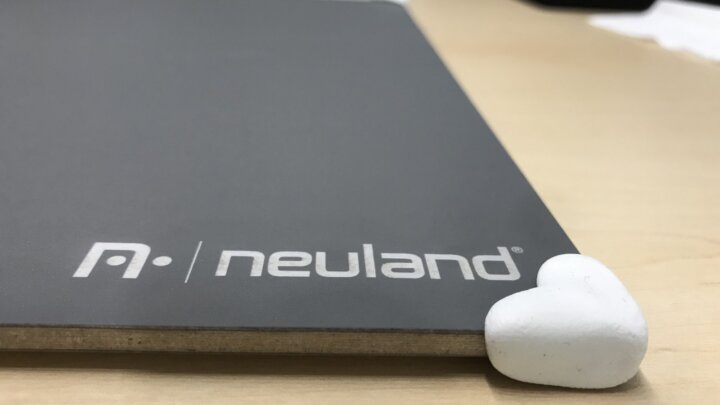
My lettering practice has spread across sketchbooks, learning pads and flipchart sheets. Now I am also practising on the myWorkBoard WB from Neuland, a small board that fits beside the laptop.
The board was fine for what I wanted to do. The only annoying thing was its sharp edges. Apparently, even lettering practice sometimes needs something other than another marker.
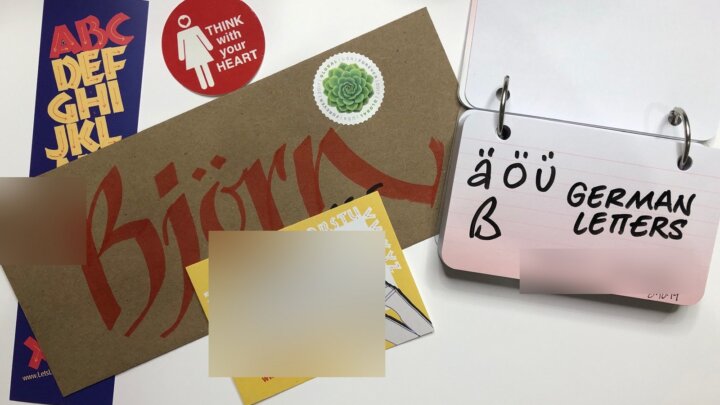
I have been reading Lettering Journey: Fast. Functional. Fun! by Heather Leavitt Martinez. What an inspiring book! It also left me with a few rather specific questions about the letters I was practising.
So I wrote Heather a letter. Were there lowercase Roman letters? What would the German letters ä, ö and ü look like in one of her fonts? And what about the slightly strange German capital ẞ? Quite a lot of questions for a single letter.
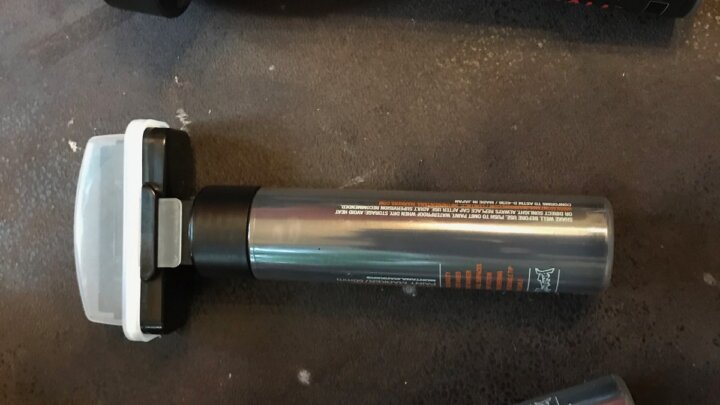
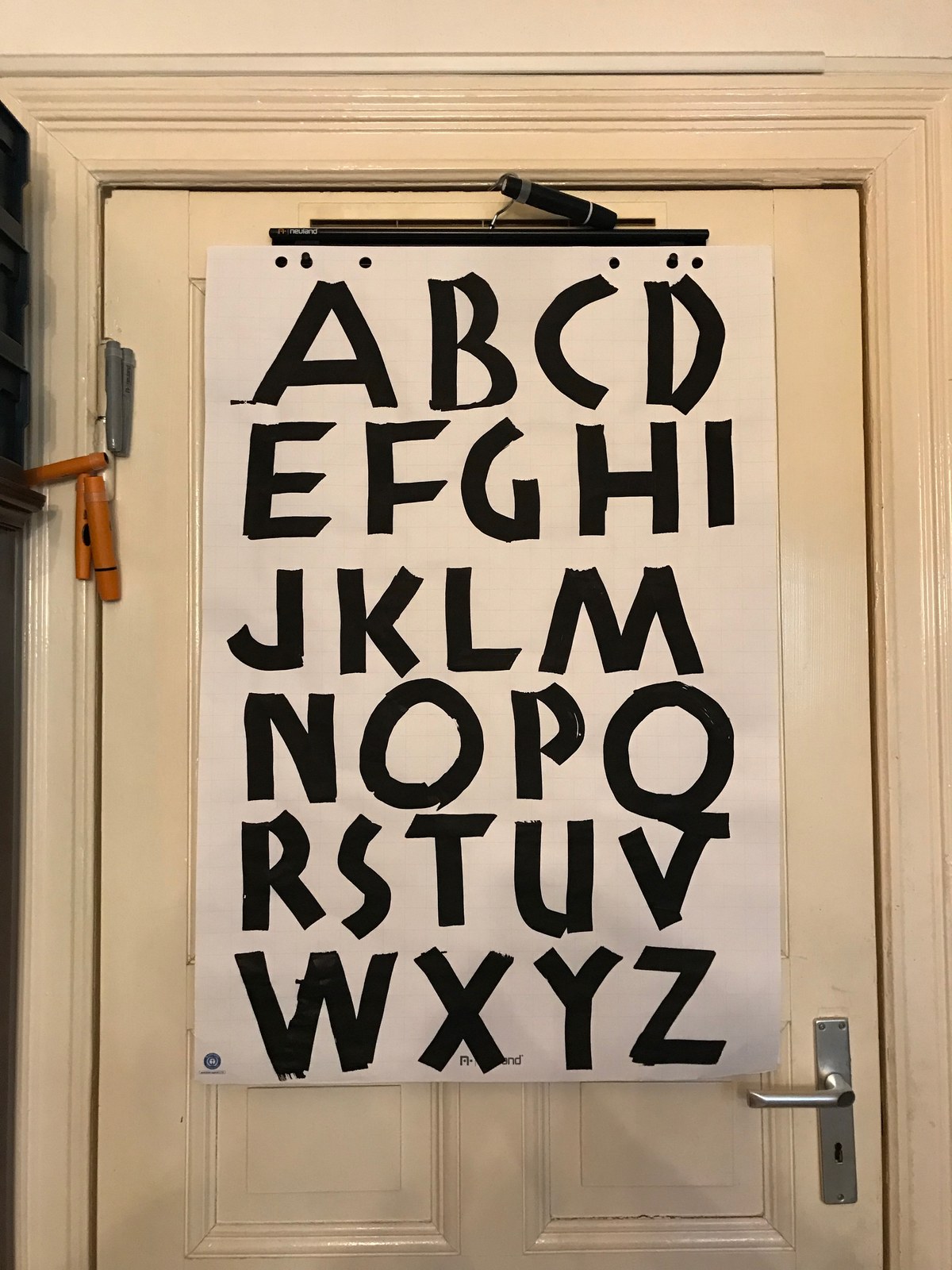
After experimenting with different markers, I wanted to practise writing bigger. Much bigger. With 5 cm and 6 cm markers from Montana and MOLOTOW, my alphabet took up most of a door.
A door-sized alphabet practice sheet
I used Neuland’s handlettering practice sheets as a reference. This was lettering practice at a rather different scale. The wide, flat nibs give a good idea of what 5 cm and 6 cm actually look like. There is a lot of marker to work with.
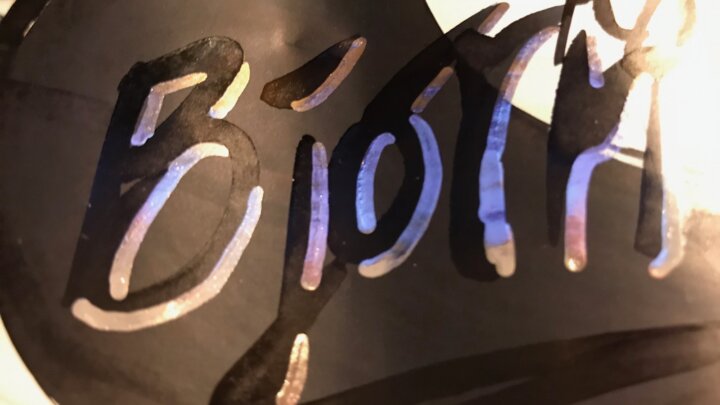
This time, I wanted to play with the markers themselves: MOLOTOW Liquid Chrome, Coversall and Speedflow. A magazine page became my test surface. No finished flipchart required.
I tried broad curves, overlapping letters and large dark shapes. Some strokes let the print show through; others almost covered it. The magazine article was having a difficult time competing for attention.
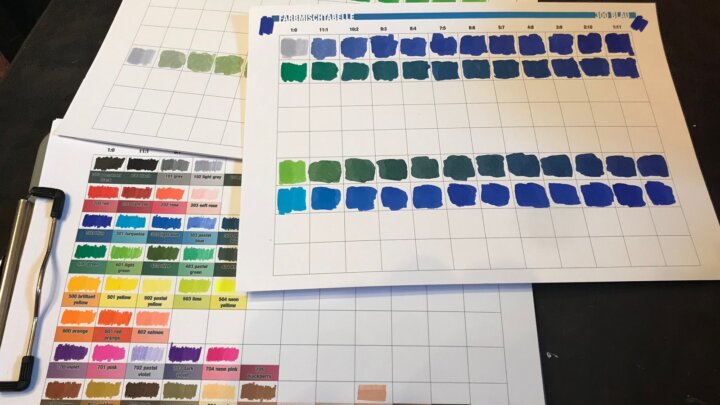
Having plenty of marker colors is one thing. Having the right ones is another. At paydirekt, I wanted to mix the company’s corporate design colors for my visual facilitation work.
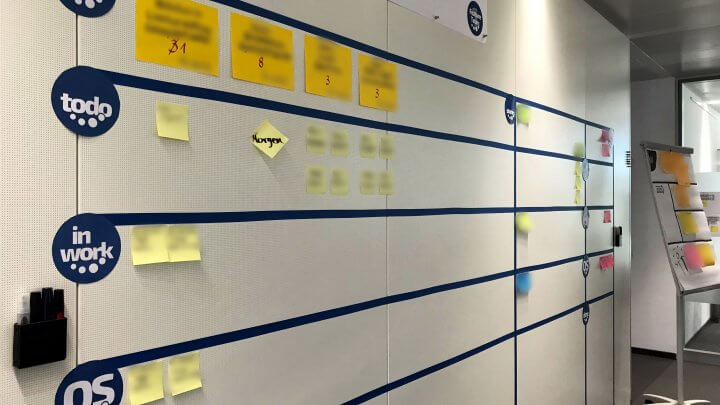
I had already used the corporate design when renovating the Scrum boards. Now I wanted to get the inks closer to that palette. So I started mixing, using printed tables to record the ratios and paint a sample of each mixture.
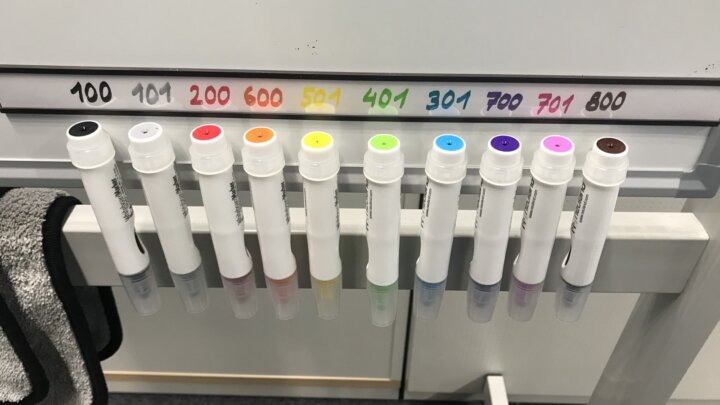
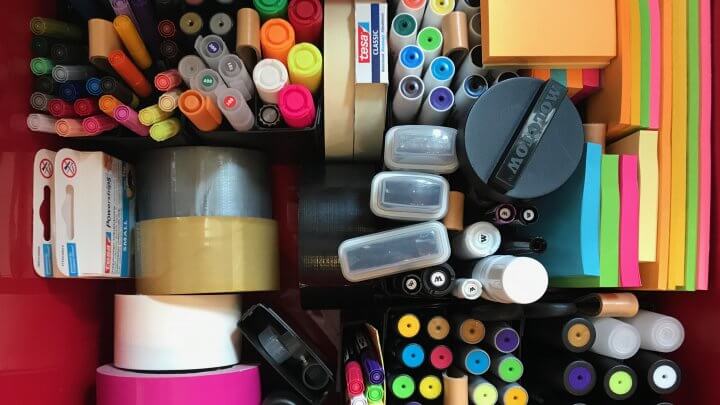
My enthusiasm for markers has made its way from my sketchbooks onto our shared boards. As I wrote in Renovating Scrum Boards, I wanted my colleagues to enjoy those tools, too. That also meant giving the markers a home.
Before putting the sets together, I tried different colors on glass. A few icons, strokes and swatches helped me compare the inks on the board itself. Lettering practice was another chance to get to know the tools.
Now it was time to combine my new skills with my goal to become more proficient in the Scrum process. As I was always a team player who’s goal was to bring people together and treat each other with the most respect possible, it was just natural to volunteer organising retrospectives.
As I already described in Becoming a Visual Facilitator I’m training on my visual facilication skills which encompasses constantly using my new Neuland markers. Since I really love those tools, I wanted my colleagues to have the chance to love those markers, too.
What happens if you give more than a grand to computer scientist with a weak spot for team organization, Scrum and Agile in general? He buys markers and learning material about doodling … to soon understand that there’s a whole lot more than being able to doodle things nicely. At least that’s what happened to me.